
Custom Mudroom Remodel in Bend, Oregon: Entryway Storage Solutions with Built-In Bench and Locker Design
A custom mudroom remodel in Bend turns your entryway into a high-traffic “damage-control zone” that stops mud, moisture, and gear at the door—making the rest of your home cleaner, calmer, and easier to live in. By planning around real traffic flow, inventory, durable materials, smart storage zones, and essentials like lighting, outlets, and ventilation, you get an entry that works immediately, holds up to Central Oregon seasons, and adds everyday livability buyers notice.

Is your entryway a pile of boots, wet coats, and backpacks that somehow multiplies overnight?
Do you feel like you’re cleaning the same mud and pine needles every single day?
And why does it always happen right when guests show up?
I’ve worked on enough interior remodeling in Bend to tell you this is normal.
Bend homes live hard at the front door.
Ski days.
Dog walks.
Trail runs.
Kids.
Groceries.
Rain that turns to snow that turns to slush.
A mudroom isn’t a “nice-to-have” here.
It’s the system that keeps the rest of your house from becoming the mudroom.
Key takeaway: If you treat your entry like a high-traffic work zone, the whole house gets easier to live in.
 <\br>
<\br>
Mudroom remodel Bend Oregon: why these “small” spaces matter more than you think
A mudroom is a functional entryway designed to catch the chaos before it spreads.
It’s where you drop the stuff that doesn’t belong in your kitchen, living room, or hallway.
In weather-prone places like Bend, a mudroom does three big jobs:
- Controls moisture, dirt, and snow before it hits your flooring and rugs
- Forces organization through storage zones and habits
- Protects the rest of the home from daily wear
Here’s a stat that backs up the “mudrooms matter” argument.
The National Association of Realtors has consistently found that refinishing or improving hardwood floors can return strong value at resale, often around 147% cost recovery in their Remodeling Impact reports.
Why bring that up?
Because mudrooms reduce floor damage and mess in the first place.
Less grit.
Less water.
Less abrasion.
That’s not theory.
That’s real-world wear management.
I also like the way building science folks say it.
ASHRAE guidance on indoor air quality points out that source control is one of the most effective ways to improve indoor environments.
A mudroom is source control for dirt, pollen, and moisture.
You’re stopping the problem at the door.
Key takeaway: A mudroom is a damage-control zone, and Bend homes need one more than most.
Custom mudroom remodel benefits: what changes fast once it’s built right
When a custom mudroom remodel is done well, you feel it immediately.
Not “someday.”
Not after you buy a bunch of bins.
Immediately.
The wins I see homeowners rave about most:
- Your house feels cleaner because the mess has a designated landing zone
- Mornings run smoother because everyone knows where their stuff lives
- Your entry looks intentional, not accidental
- Seasonal gear stops taking over bedrooms and closets
In Central Oregon, seasonal gear is the whole game.
You’re not just storing two coats.
You’re managing ski helmets, gloves, goggles, boot dryers, dog towels, wet packs, and biking gear.
And yes, it helps resale.
The 2024 Cost vs. Value report from Zonda shows that midrange remodels can recoup meaningful chunks of cost depending on the project and market.
A mudroom isn’t always reported as a standalone line item, but built-in storage and functional entry upgrades are the kind of “livability features” buyers notice instantly during a showing.
Key takeaway: The right mudroom pays you back in time, calm, and a cleaner home.
Planning a mudroom renovation in Bend: the 4 questions I ask before anyone builds anything
Most mudroom remodel frustrations come from skipping planning.
The space looks good.
But it doesn’t work.
Before I touch design sketches, I ask these:
1) Where does the traffic actually come in?
Is your “main entry” the front door, garage door, or a side door?
In Bend, it’s usually the garage.
Design for reality, not the floor plan label.
2) Who uses it and how?
Two adults and a dog is different from two adults, three kids, and a rotating cast of friends.
Usage patterns decide everything.
3) What weather are we designing for?
Bend swings hard.
Cold winters.
Dry summers.
Shoulder seasons that are basically “wet gear season.”
Moisture management is not optional.
4) What’s the budget and timeline?
Custom cabinetry, electrical, ventilation, and flooring choices move the price fast.
A realistic timeline for a proper redesign and build is often several weeks to a few months, especially if you’re ordering custom components and coordinating trades.
A quick personal story here.
I once helped a family near NW Crossing who kept complaining their “new mudroom” felt cramped.
On paper it was big enough.
In practice, the bench sat opposite the hooks with only a narrow walkway.
When two kids tried to sit and take off boots at the same time, it turned into a human traffic jam.
We fixed it by shifting the bench run 8 inches and changing the door swing.
That tiny layout change did more than any expensive finish upgrade ever could.
Key takeaway: A mudroom remodel lives or dies by traffic flow, not by Pinterest photos.
 <\br>
<\br>
Entryway storage solutions: do the inventory before you design a single shelf
If you want entryway storage solutions that actually work, start with a ruthless inventory.
No guessing.
No “we’ll figure it out later.”
I break items into three categories:
- Daily grab-and-go stuff
- Weekly use stuff
- Seasonal outdoor gear
Daily essentials usually include:
- Shoes and boots
- Coats
- Backpacks, purses, work bags
- Dog leashes
- Keys and mail
Seasonal outdoor gear in Bend usually includes:
- Skis and poles
- Snowboards
- Helmets and goggles
- Boot bags
- Wet gloves and hats
- Bikes and helmets in summer
Then I ask one painful question.
What currently has no home?
That “homeless stuff” is what makes your entry feel messy.
Key takeaway: If you don’t inventory first, you’ll build storage for an imaginary version of your life.
Traffic flow analysis: the sneaky reason “nice storage” still feels chaotic
Most entryways fail because they don’t respect movement.
People don’t enter single-file like a museum line.
They enter carrying stuff.
They bend down.
They turn around.
They open doors.
They set bags down.
Here’s my simple traffic flow checklist:
- Can two people pass each other without shoulder-checking?
- Can someone sit on the bench and someone else still walk by?
- Do doors and drawers collide with each other?
- Is the drop zone before the “deep storage zone”?
- Is there a spot for wet items that won’t drip onto dry items?
If your mudroom is small, this matters even more.
One wrong door swing can ruin the whole experience.
Key takeaway: Great mudrooms feel effortless because the layout respects how humans actually move.
Mudroom accessibility: make it work for every height and every season
Accessibility sounds formal, but it’s simple.
Can everyone in your house use the storage without asking for help?
I like to design in layers:
- Low zone for kids and shoes
- Mid zone for hooks and daily items
- High zone for overflow and seasonal storage
Practical accessibility upgrades I recommend a lot:
- Lower hooks for kids so they can own their routines
- A dedicated cubby per person so items don’t blend together
- A real bench height that doesn’t feel like you’re doing a squat workout
- Clear sightlines so you can see what’s missing at a glance
Labeling works too, especially for families.
You don’t need a label maker obsession.
Even simple basket tags can stop daily friction.
Key takeaway: The best organization system is the one your kids can use without you.
Custom storage configuration options: what I use when I want a mudroom to feel bigger
A smart configuration can make a tight entryway feel like it doubled.
Not by magic.
By using walls and vertical height.
Wall-mounted entryway storage solutions that perform:
- Floating shelves for hats, baskets, and décor that doesn’t eat floor space
- Hook rails for coats and bags
- Hanging organizers for gloves, dog gear, and small stuff
Floor-to-ceiling storage is the cheat code in Bend.
Why?
Because you can hide seasonal overflow up high.
You don’t want ski gear staring at you in July.
Multi-functional pieces reduce clutter fast:
- Bench plus shoe storage
- Tall cabinet plus broom and vacuum parking
- Closed cabinetry for visual calm
Climate-controlled considerations matter more than people think.
If you’re storing adhesives, wax, sensitive gear, or you just hate the smell of damp fabric, you’ll want airflow and sometimes a bit of heat management.
Not “temperature-controlled like a wine cellar.”
Just designed so wet items don’t fester.
Key takeaway: Vertical storage and multi-use pieces are how you win in small to mid-size entryways.
Durable materials for Bend: where I refuse to compromise
Bend weather is hard on finishes.
Snow melt.
Mud.
Sand.
Freeze-thaw cycles.
And the constant in-and-out.
For heavy-traffic flooring, I generally steer people toward:
- Porcelain tile with a slip-resistant finish
- Waterproof luxury vinyl plank when comfort and warmth matter
- Concrete or epoxy in certain garage-adjacent spaces
Tile gets my vote in many true mudrooms because it’s tough and easy to clean.
The Tile Council of North America recommends porcelain tile in wet and heavy-use environments because of its low absorption and durability.
That’s exactly the abuse a Bend entry takes.
For walls, I like:
- Washable paints in higher sheen levels
- Durable wainscoting or wall paneling in splash zones
- Proper baseboard choices that don’t swell when they get wet
Hardware matters too.
This is not the place for the cheapest hooks on the internet.
Look for:
- Solid metal hooks with a real mounting system
- Cabinet hinges that can handle constant slamming
- Pulls that don’t loosen every three months
Key takeaway: Your mudroom finishes should be chosen like it’s a utility space, not a showroom.
Built-in bench design: the one feature that fixes daily pain instantly
People think the star of the mudroom is the lockers.
I think it’s the built-in bench design.
Why?
Because sitting down changes everything.
Boots come off cleaner.
Kids take longer to drop gear on the floor.
You stop balancing on one leg like you’re in a fitness test.
Bench specs I use as a baseline (and adjust for the family):
- Height around 17 to 19 inches for most adults
- Depth around 14 to 16 inches without a cushion
- Deeper if you’re doing cushions, but not so deep it feels awkward
Weight capacity is real.
Benches become step stools.
They become “sit and tie shoes.”
They become “I’m going to set this heavy cooler here for a second.”
Build it like it will be abused, because it will.
Key takeaway: A real bench turns your mudroom from storage into a daily-use system.
Mudroom under-bench storage: choose the style based on how messy your family really is
Under-bench storage is where you either win big or regret everything.
Here are the three under-bench options I use most, and when they work best:
- Open shelving with baskets
Best for families who move fast and don’t want to open drawers.
Good for gloves, hats, dog gear, and quick toss-in items.
- Drawers
Best for keeping small items from becoming visual clutter.
Great for one-family-member-per-drawer setups.
- Closed cabinets
Best for hiding bulk items and for a clean, minimalist look.
Also good if you hate seeing shoes.
If your family is chaotic, go more closed.
If your family is disciplined, open cubbies can look great and stay tidy.
Key takeaway: Storage style should match your habits, not your aspiration.
Personalized locker design and cubbies: the fastest way to stop the pile-up
A custom locker system is basically relationship counseling for families.
When every person has a defined zone, arguments drop.
Key elements in locker and cubby design systems:
- One vertical section per person
- Hooks at the right heights for adults and kids
- A boot and shoe cubby that fits your biggest winter boots
- A top shelf for helmets, hats, and seasonal overflow
- A backpack hook that can handle real weight
Doors or open-face lockers?
Open-face is faster and easier day-to-day.
Doors look cleaner and hide mess.
If you’re honest about your household, the choice usually makes itself.
Compartment sizing tips I use in Bend all the time:
- More height for long coats and puffers
- Wider shoe bays for bulky winter boots
- Dedicated shelf for helmets so they don’t roll off and crack
Key takeaway: Assigning each person a lane is the simplest way to keep the entryway calm.
Design style and custom woodworking Bend: how to make it feel like it always belonged
A mudroom shouldn’t look like an afterthought bolted onto your house.
It should match your architecture.
In Bend, I see a lot of:
- Modern and minimalist homes that want clean lines and flat-panel cabinetry
- Rustic and craftsman styles that lean into wood tones and classic trim details
- Contemporary hybrids that mix painted cabinetry with warm wood accents
This is where custom woodworking in Bend makes a noticeable difference.
Trim alignment.
Consistent reveals.
Durable finishes.
Details that don’t scream “stock cabinet hack.”
If you’re working with a design and build team, you can usually get:
- Layout help that respects structure and utilities
- 3D renderings so you can see it before it’s built
- Material and finish guidance that survives real life
At DCR Northwest, for example, the scope can go beyond a mudroom if you want it to.
They handle custom home renovations from kitchen remodels to bathroom remodels to entire home remodels.
Link: https://www.dcrnorthwest.com/service/full-home-reno
They also build ADUs and DADUs.
And they can operate as an all-in-one design and build team, which keeps accountability in one place.
They exclusively serve major areas in and around Bend, Oregon.
That includes Awbrey Butte, Awbrey Glen, NW Crossing, Pilot Butte, Sisters, and Redmond.
If you want to talk through a mudroom remodel plan:
Phone: 541-699-2502
Email: matt@dcrnorthwest.com
Key takeaway: When the craftsmanship and style match your home, the mudroom stops feeling like a project and starts feeling original.
Project example
Brookswood whole home renovation (Bend, Oregon)
Link: https://www.dcrnorthwest.com/project/brookswood-whole-home-renovation-bend-oregon
Now that the layout, storage strategy, and built-ins are dialed, the next make-or-break upgrades are the unseen ones people forget first: lighting, outlets, and moisture control that keeps wet gear from stinking up the whole house.
Lighting and Electrical Upgrades: The Stuff You Don’t Notice Until It’s Wrong
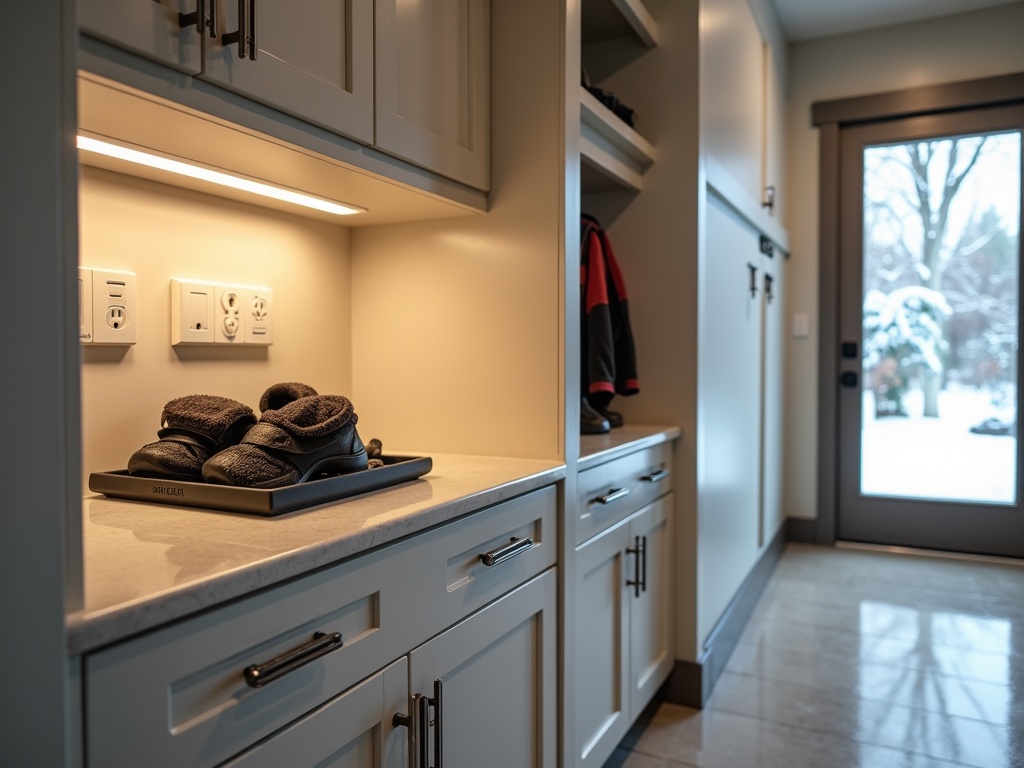
If your mudroom feels “fine” in summer and miserable in winter, it’s probably lighting. Bend gets dark early for a good chunk of the year. And most entryways are built like afterthought tunnels with one sad ceiling fixture.
The fix is usually simple: Layered lighting. Not brighter lighting, better lighting.
Here’s what I like to build into a mudroom remodel in Bend, Oregon:
- Ambient lighting to make the whole space feel welcoming
- Task lighting right where you actually use your hands (bench, hooks, lockers)
- Automatic controls so you’re not fumbling for switches with grocery bags
Motion sensors are a cheat code. A good sensor means the mudroom turns on the second you enter, then shuts off when you leave. You’ll save energy, but more importantly, you’ll stop living in a dim cave.
Outlets matter more than people think. If your mudroom is where life happens, it needs power where life happens.
Mudroom electrical upgrades I recommend constantly:
- Outlets near the bench for charging phones and headlamps
- A dedicated outlet for a boot dryer
- A spot for a stick vac or cordless vacuum dock
- If you have e-bikes or battery packs, plan a safe charging location with airflow
A quick note on safety. If you’re charging lithium batteries, don’t shove them into a closed cabinet with zero ventilation. That’s not me being dramatic. That’s just basic risk management.
Key takeaway: Great lighting and outlet planning makes your mudroom feel effortless instead of annoying.

Ventilation and Moisture Control: The Hidden Difference Between “Mudroom” and “Wet Dog Closet”
Want to know why some entryways always smell like damp gloves and despair? No airflow and no drying plan. Wet gear gets trapped in a warm-ish box and it never fully dries.
In Bend, moisture isn’t just rain. It’s snow melt, slush, ski days followed by boots sitting overnight, and dogs coming in with wet fur and shaking once like a sprinkler system.
The building science principle here is simple: If you can’t remove moisture, you’ll grow problems. The EPA’s guidance on mold prevention is blunt: control moisture and you control mold. That’s the whole game.
My go-to moisture management setup:
- A durable waterproof floor and a real entry mat system
- Hooks spaced so coats can actually dry instead of stacking on each other
- A vent fan in the mudroom if it’s enclosed and always damp
- A boot tray zone so melt water stays contained
- Optional: a boot dryer, especially for ski families
Personal anecdote: I worked with a family who swore their mudroom was “haunted” by odor. They had beautiful lockers, paint looked great, hardware was solid. But every time it warmed up outside, the smell came back. We opened up the design and found the issue wasn’t cleanliness. It was airflow. Wet gear was being stuffed into a closed system with no ventilation and no drying strategy. We added a properly sized exhaust fan, created a dedicated wet zone with a tray, and swapped a couple locker doors for open sections. Within a week, the problem basically disappeared.
Key takeaway: Drying is a feature, not a habit you can rely on forever.
Flooring That Survives Real Bend Living
Mudrooms aren’t gentle spaces. They’re high-traffic entryway work zones. Your flooring needs to handle grit, melt water, dog nails, and the occasional dropped ski edge.
Here’s what consistently performs well:
- Porcelain tile with a slip-resistant rating
- Luxury vinyl plank for warmer feel and softer underfoot
- Concrete or epoxy in garage-adjacent transitions
Porcelain tile is still the classic choice because it’s tough and low-absorption. That durability is why tile standards groups like the Tile Council of North America consistently point people toward porcelain in wet, heavy-use environments.
If you go tile, don’t forget the comfort factor. Cold tile in winter is real.
Solutions I like:
- A good rug system that’s easy to wash
- Radiant heat if the budget and scope make sense
- A layout that keeps “standing time” short by putting the bench in the right place
And don’t ignore transitions and thresholds. This is where water sneaks in and where trips happen.
Threshold details that prevent headaches:
- A clean, durable transition strip between mudroom and main flooring
- Weather stripping and a solid door sweep at exterior or garage doors
- Slip-resistant mats that don’t curl at the edges
Key takeaway: The right mudroom flooring is boring in the best way because it never becomes a problem.
Design Trends That Actually Help You (Not Just Look Good for Photos)
Trends are dangerous because they can make you build for the camera instead of for life. But some trends are popular because they work.
Trends I like because they improve function:
- Minimalist, closed storage for visual calm
- A mix of open zones (fast daily use) and closed zones (hide the chaos)
- Built-in seating that feels intentional, not wedged in
- Multi-functional furniture like bench-plus-drawer combos
Sustainability trends are worth paying attention to too. Not because it’s trendy. Because durable, repairable materials age better and cost less over time.
Sustainable choices that don’t feel preachy:
- Locally sourced wood when possible
- Low-VOC finishes so the space doesn’t off-gas for weeks
- Hardware you won’t replace every year
- Building for longevity instead of novelty
And tech integration is getting more common in Bend homes. Not smart-home gimmicks. Useful stuff.
Tech that’s actually helpful:
- Smart switches, motion sensors, and timers for fans
- Charging zones that are planned, not improvised
- Simple humidity monitoring if your space tends to stay damp
Key takeaway: The best “trend” is designing a mudroom that stays easy for the next ten years.
Custom Cabinetry and Woodworking: How to Avoid the Cheap-Built Look Forever
If you want that built-in bench and locker design to feel like it belongs, cabinet construction matters. This is where craftsmanship separates “nice idea” from “finished home.”
What I look for in custom cabinetry and entryway cabinet design:
- Tight, consistent reveals and clean trim lines
- Materials that won’t warp with seasonal changes
- Protective finishes that can handle wet jackets brushing against sides
- Hardware that doesn’t loosen and sag under daily use
- Interior organization features like adjustable shelves and durable hooks
And the design has to integrate with the home. If your house is craftsman, the mudroom should respect that. If your home is modern, don’t suddenly install ornate raised-panel doors because they were on sale.
Integration details that make it feel original:
- Matching baseboard and casing profiles
- Paint and stain that line up with the rest of the house
- Consistent door styles and proportions
- Thoughtful alignment with windows, switches, and vents
Key takeaway: The small alignment details are what make a mudroom look high-end long after the “new project glow” wears off.
The Remodel Process and Timeline: What Actually Happens, and Why It Takes Longer Than You’d Think
Most homeowners underestimate two things: How many decisions there are, and how much of the timeline is lead times, not labor.
A normal mudroom renovation flow looks like this:
- Consultation and measurement
- Design concept and layout options
- 3D renderings so you can see the plan before it’s built
- Material selections (flooring, paint, cabinetry finish, hardware)
- Permitting if changes touch structure, electrical, or mechanical
- Demo and prep
- Flooring install
- Cabinetry and built-ins install
- Electrical and ventilation work
- Paint and finish carpentry
- Final adjustments and walkthrough
Bend has real permitting and code expectations, especially if you’re moving electrical, adding ventilation, or changing structural elements. So the best plan is to assume you’ll need coordination. Not just construction.
Key takeaway: The smoothest remodels are the ones where the plan is clear before the first piece gets removed.
Small Entryways: The Space-Saving Tricks That Beat “Just Declutter More”
If your entry is tight, you don’t need a miracle. You need vertical storage and fewer floor obstacles.
Space-saving entryway solutions that actually work:
- Floor-to-ceiling cabinets to capture dead vertical space
- Overhead shelves for seasonal overflow
- Corner shelves or angled hooks that use awkward areas
- Slim bench designs with high-performance under-bench storage
- Wall-mounted hook rails to get items off the floor fast
Multi-functional design is how small spaces win:
- Bench plus drawers
- Tall cabinet for brooms, vacuum, and cleaning supplies
- Hidden compartments for dog gear and winter accessories
Visual expansion is real too. A mudroom can feel bigger without physically adding square footage.
Simple visual tricks:
- Light paint colors and consistent finishes
- Better lighting, especially in shadowy corners
- A balance of open and closed storage so it doesn’t feel like a wall of boxes
- A mirror if it makes sense and won’t get constantly splashed
Key takeaway: In small mudrooms, the walls and vertical height are your best square footage.
Seasonal Organization in Bend: Build for Ski Season, Then Make It Disappear
The biggest mistake I see in Central Oregon homes is designing a mudroom for average life. Bend doesn’t live in average life. It lives in seasons.
Winter mudroom organization needs:
- Space for ski and snowboard gear
- Boot storage that fits tall, bulky winter boots
- A wet zone that can handle slush and melt water
- Good airflow so wet items don’t stink up the whole house
Summer organization needs:
- Bike helmets and hydration packs
- Hiking and climbing gear
- Dog accessories and towels
- Ventilation so sweaty gear actually dries between uses
Seasonal rotation strategies keep the mudroom from becoming a permanent gear museum:
- Top shelves for off-season bins
- Closed cabinets for overflow
- A simple rule: if you haven’t used it in 30 days, it goes up high or out of the mudroom
Key takeaway: Bend mudrooms work best when they can flex with the season without feeling cluttered year-round.
Functional Organization Systems: Build the Routine into the Architecture
A beautiful mudroom that doesn’t stay organized is just expensive clutter. The goal is to make the right behavior the easiest behavior.
Here are the functional features that prevent daily mess:
- Shoe and boot storage that matches how many pairs actually show up at the door
- Coat storage with enough spacing for drying
- Backpack hooks designed for real weight, not decorative loads
- A small shelf or tray for keys, wallets, and sunglasses
- Drawers or baskets for gloves, hats, dog leashes, and sunscreen
A pro-level move is creating zones:
- Drop zone right by the door for immediate unloading
- Sit zone at the bench for shoes and boots
- Hang zone for coats, packs, and helmets
- Dry zone for wet gear and boot trays
- Overflow zone above for seasonal items
Key takeaway: If you design the zones right, organization becomes automatic instead of aspirational.
Budget and Cost Management: How to Avoid Overspending Without Building Something You Hate
Mudrooms can be simple or they can be basically custom furniture plus mechanical upgrades. Costs swing based on size and complexity, cabinetry level, flooring choice, electrical and ventilation additions, and any structural or layout changes.
If you want to manage budget without sacrificing function, these strategies work:
- Phase the project: Do the floor and paint now, built-ins later, or vice versa.
- Use standard cabinet sizes where possible: Reserve custom for the tricky spots.
- Spend on the high-touch items: Hooks, hinges, drawers, flooring, and ventilation pay you back daily.
- Don’t pay extra for features you won’t use: A fancy door style won’t fix a bad layout.
And ROI should be seen in two ways. Resale matters, yes. But daily life matters more. If a mudroom saves you 10 minutes every morning and keeps the rest of the house cleaner, that’s not a vague benefit. That’s time and stress you get back every day.
Key takeaway: Spend money where friction lives, and you’ll feel the upgrade constantly.
Working with Local Bend Contractors and Designers: What to Look for Before You Sign Anything
A mudroom remodel touches a lot of trades quickly. Carpentry, flooring, electrical, ventilation, paint, sometimes plumbing if you’re adding a sink or dog wash nearby.
So the biggest thing to look for is coordination. Who is responsible for making sure everything fits and functions together?
What I recommend checking before hiring:
- Portfolio photos of real mudrooms and built-ins, not just kitchens
- References and reviews that mention communication and schedule management
- A clear scope of work that lists what’s included and what’s excluded
- A realistic timeline that accounts for ordering and lead times
- Design support, especially if you’re doing custom locker systems and cabinetry
This is where an all-in-one design and build team can simplify the process. One point of accountability tends to reduce the “who’s responsible for this mistake” headache.
At Bend Craftsmen Company, for example, they do garage and mudroom remodeling ranging from kitchen remodels to bathroom remodels to entire home remodels. They also offer ADU and DADU builds. They have the option to operate as an all-in-one design and build team, which can keep design, budgeting, and construction aligned.
Link: https://www.bendcraftsmencompany.com
Garage and mudroom remodeling link: https://www.peacockandco.com/garage-and-mudroom-remodeling
They exclusively service the major areas in and around Bend, Oregon. That includes Awbrey Butte, Awbrey Glen, NW Crossing, Pilot Butte, Sisters, and Redmond.
If you want to talk through your mudroom plans:
Phone: 541-699-2502
Email: matt@dcrnorthwest.com
Key takeaway: Choose a team that can design, coordinate, and finish the details cleanly, because mudrooms punish sloppy execution.
Maintenance and Long-term Care: Keep It Looking Good Without Babying It
The best mudroom is the one that stays easy to maintain. If it requires special treatment, it won’t get it.
Simple maintenance that keeps everything working:
- Sweep or vacuum grit weekly: Grit is what scratches floors and wears finishes.
- Wipe down hooks and bench surfaces during wet season: Salt and grime build up faster than you think.
- Check hinges and pulls twice a year: Tighten hardware before it loosens and sags.
- Refresh caulk and seals as needed: Especially around thresholds and trim in splash zones.
Seasonal adjustments help too:
- Rotate bins and baskets based on weather
- Move wet gear tools forward in winter (boot trays, towels)
- Swap to lighter storage needs in summer (sunscreen, water bottles, bike gear)
Key takeaway: A well-designed mudroom should stay tidy with simple weekly habits, not constant effort.
The Real Goal: Make the Rest of Your House Feel Bigger
A mudroom remodel isn’t about having a pretty bench. It’s about making the rest of your home calmer.
When the entryway storage solutions are right, you stop cleaning the same mess over and over. You stop stepping over backpacks. You stop wondering where the gloves went. And your house starts feeling like it has more space, even though nothing got bigger.
So if you’re standing in your entryway right now looking at the pile and thinking, why can’t we get ahead of this, the answer is simple. You don’t need more discipline. You need a better system built into the space.
Build the system once. Enjoy the payoff every day after.
For more on full home renovation, check out these project examples and explore their services.
Full home renovation link: https://www.dcrnorthwest.com/service/full-home-reno
Project examples link: https://www.dcrnorthwest.com/project/brookswood-whole-home-renovation-bend-oregon
Services link: https://www.dcrnorthwest.com/services
